~70% of cancer deaths are from cancers employees are not being screened for1,2*
Only ~30% of cancer deaths have recommended screening available.1,2 The Galleri® multi-cancer early detection test can help fill that critical gap in your company’s cancer strategy by screening for a "fingerprint" for many of the deadliest cancers with a single blood test. 1,3
The Galleri test does not detect a signal for all cancers, and false positive or false negative results can occur. The Galleri test should be used in addition to healthcare provider recommended screening tests.
*Assumes screening is available for all prostate, breast, cervical, and colorectal cancer cases and 43% of lung cancer cases (based on the estimated proportion of lung cancers that occur in screen-eligible individuals older than 40 years).

The Galleri test does not detect a signal for all cancers, and false positive or false negative results can occur. The Galleri test should be used in addition to healthcare provider recommended screening tests.
*Assumes screening is available for all prostate, breast, cervical, and colorectal cancer cases and 43% of lung cancer cases (based on the estimated proportion of lung cancers that occur in screen-eligible individuals older than 40 years).
Hear from Texas Children's Hospital
"What if you could catch cancer early enough to make a difference?"
Texas Children’s Hospital employee Gracie read those words on a workplace bulletin and was inspired to take the Galleri® multi-cancer early detection test. The test is offered as a benefit for eligible Texas Children’s Hospital employees because, as HR manager Kassy notes, “early detection is key in treating cancer, and…what better way to help our team members than to offer that type of benefit.”

Cancer and Health Equity
Research shows that cancer screening rates are substantially lower among those from racial/ethnic minorities compared to their white counterparts.7 The Galleri test offers equitable access to multi-cancer screening with just 1 blood draw, which can be completed almost anywhere: workplace events, home visits, and 6,600+ partner labs nationwide.
Galleri should be used in addition to healthcare provider recommended screening tests.

The Galleri Experience
We partner with you to leverage customizable emails, direct mailers, flyers/posters, presentations, landing page and more to drive employee awareness and education about the Galleri test.
Employees can request their test through the Galleri portal. Once ordered by a physician, the test kit ships directly to the employee with information on how to schedule a blood draw at a nearby partner clinic, at an onsite event, or in their own home.
Results are returned about 2 weeks after GRAIL receives the sample in our lab, and all “Cancer Signal Detected” results are shared live with the employee by a healthcare professional.
All employees who receive a “Cancer Signal Detected” result are contacted by the GRAIL Patient Advocate who, if necessary, assists with finding an in-network primary care provider (PCP) to complete diagnostic next steps and connect the employee with other relevant benefits. GRAIL also provides access to expert patient navigation support for the employee’s PCP.
How Galleri Works
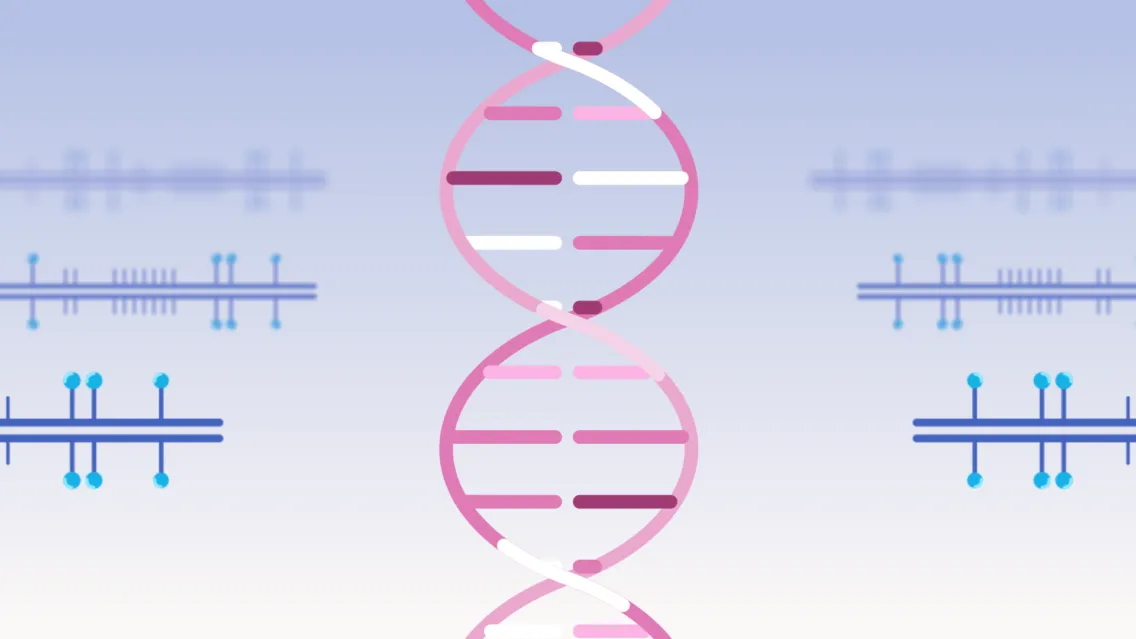
All cells in your body, including cancer cells, shed DNA fragments into the bloodstream when they complete their life cycle and die.
The Galleri test screens for DNA fragments from cancer growing in the body. Although there are many types of cancer, the DNA fragments act like a unique “fingerprint” of cancer.3,8,9 The results also provide direction to your doctor on the cancer’s origin and to help guide the next steps in diagnosis.10*
*In a clinical study, Cancer Signal Origin (CSO) prediction accuracy was 93.4% for participants with a cancer diagnosis after a Cancer Signal Detected test result.
To support and validate our technology, studies are being performed at leading health systems and academic medical centers in the US and United Kingdom. Adding the Galleri test to guideline recommended screening tests allows you to do more to screen for cancer.13
We collaborated with leading cancer institutes to study the Galleri test, including



How Galleri has helped others
-

Testimonial - Patient: Patty
Cancer Signal Detected
-

Testimonial - Patient: Gracie & Kassy
Cancer Signal Detected
-

Patient testimonial: Valerie
Cancer Signal Detected
-

Patient testimonial: Roger
Cancer Signal Detected


Resources and Articles
-
Report

The Soaring Cost of Cancer Care
-
Report
Cancer Support: Unveiling Employer Concerns and Best Practices
-
Report

Closing the Gap on Cancer
-
Report
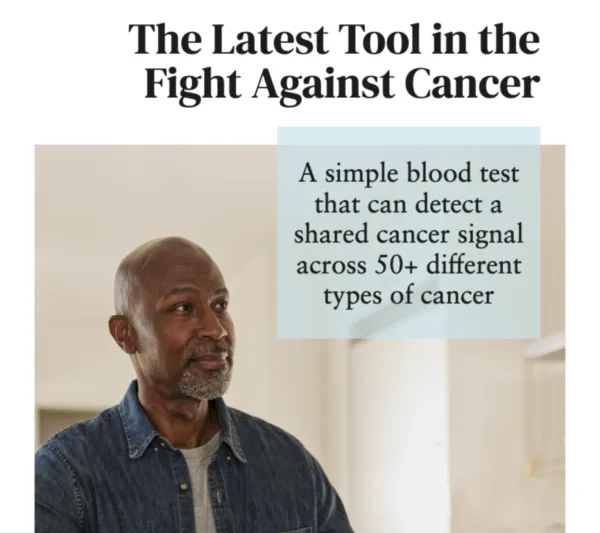
The Latest Tool in the Fight Against Cancer (Guide)
-
Report

Is Your Benefit Mix Leaving Key Employees Behind?
-
Report
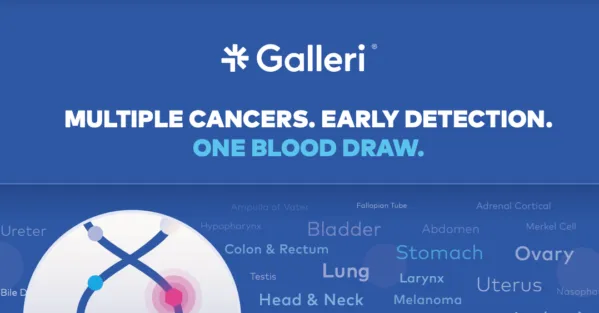
Employer Brochure
-
Report
The Missing Piece in Employee Cancer Benefits
-
Case Study
Valmont Case Study
-
Webinar
Is Your Benefits Mix Leaving Key Employees Behind?


Get Started
Fill out this form and we’ll reach out to discuss how the Galleri test could positively impact your employees and organization
-
What describes you best?
-
What are you looking for?
-
Fill in the form
Do you represent a first responder or firefighter organization? Use this form instead.
By submitting this form, you agree to GRAIL’s use of this information to contact you, including for marketing purposes. Please do not include any sensitive or confidential information, including health information. For more information, please refer to our privacy notice.
By submitting this form, you agree to GRAIL’s use of this information to contact you, including for marketing purposes. Please do not include any sensitive or confidential information, including health information. For more information, please refer to our privacy notice.
Fill out the form to download a copy of the full case study.
By submitting this form, you agree to GRAIL’s use of this information to contact you, including for marketing purposes. Please do not include any sensitive or confidential information, including health information. For more information, please refer to our privacy notice.
By submitting this form, you agree to GRAIL’s use of this information to contact you, including for marketing purposes. Please do not include any sensitive or confidential information, including health information. For more information, please refer to our privacy notice.
By submitting this form, you agree to GRAIL’s use of this information to contact you, including for marketing purposes. Please do not include any sensitive or confidential information, including health information. For more information, please refer to our privacy notice.
Frequently Asked Questions
The Galleri test screens for multiple cancers and can be taken annually as a simple blood draw. The test can screen for many aggressive cancers before symptoms appear.10 In a clinical study, the Galleri test detected a signal shared by more than 50 types of cancer.6 See the list of cancer types the Galleri test deteced.
Learn more — watch the short video: What is Galleri?
The Galleri test does not detect a signal for all cancers, and false positive or false negative results can occur. The Galleri test should be used in addition to healthcare provider recommended screening tests.
Cancers growing in the body shed DNA into the bloodstream. Although there are many types of cancer, the DNA fragments act like a unique fingerprint of cancer.9,11,12 The Galleri test can screen for many aggressive cancers before they become symptomatic,10 including those with no recommended screening tests.2,5,6 With this unique "fingerprint" of cancer, the Galleri test helps to provide direction to your healthcare provider on the cancer’s origin and the next steps in diagnosis.10,14
Watch the short video How Does the Galleri Test Work? to learn more
The Galleri test does not detect a signal for all cancers, and false positive or false negative results can occur. The Galleri test identifies DNA in the bloodstream shed by cancer cells and does not predict future genetic risk for cancer.
The Galleri test is recommended for use in adults with an elevated risk for cancer, such as those age 50 or older.
Use of the Galleri test is not recommended in individuals who are pregnant, under 22 years old, or undergoing active cancer treatment.
The Galleri test should be used in addition to healthcare provider recommended screening tests.
No. A genetic or hereditary risk assessment is a one-time-only measurement and assesses your future risk of developing cancer.15 The Galleri test is a point-in-time test that identifies DNA in the bloodstream shed by active cancer cells.9
In a clinical study, the Galleri test detected a signal shared by more than 50 types of cancer — including some fast-spreading and agressive cancers responsible for approximately two-thirds of cancer deaths.1,9 Galleri is a cancer screening test, meaning it looks for cancer before symptoms appear.10
See the list of cancer types study participants had when a cancer signal was detected.11
The Galleri test does not detect a signal for all cancers, and false positive or false negative results can occur.
Nearly 99% of people (ages 50-79) who take the Galleri test will receive a No Cancer Signal Detected result.10 In other words, approximately 1% are expected to receive a Cancer Signal Detected result. After diagnostic evaluation, around 62% of people with a Cancer Signal Detected result are expected to have a confirmed cancer diagnosis.16*
Some of the ways we measure test accuracy are with positive predictive value (PPV) and a false positive rate. A PPV is the probability that a person with a Cancer Signal Detected test result has cancer (i.e., 62%). The false positive rate was 0.4% for participants without cancer.16*
*Based on the first ~25,000 participants with 1 year of follow-up.
The Galleri test does not detect a signal for all cancers, and false positive or false negative results can occur. The Galleri test should be used in addition to healthcare provider recommended screening tests.
The Galleri test is commercially available throughout the United States and in select geographic locations through distributors. If you are located in the US, you can request a test through your healthcare provider or on our website through an independent telemedicine provider.
All employees who receive a Cancer Signal Detected result on their Galleri test receive a phone call from a trained healthcare provider to explain the results and ensure the employee has a primary care physician (PCP) with whom the results can be shared. A GRAIL patient advocate can connect the employee's PCP with expert peer-to-peer consultation services regarding next steps for diagnostic testing. If the employee does not currently have a PCP, the patient advocate will provide them with local, in-network primary care navigation support. Once a PCP is found, the patient advocate can provide connections to expert peer-to-peer physician support and conducts ongoing follow-up with the employee to confirm the appropriate next steps are taken towards diagnostic evaluation.
A Cancer Signal Detected test result is not a cancer diagnosis and requires follow-up diagnostic testing which may include lab work or imaging ordered by your
healthcare provider to confirm cancer.
There are three ways an employer can make the Galleri test available to their personnel:
1. On-site blood draw event: Most employees and eligible dependents can take the Galleri test through in-person blood draw events, typically at their station. We aim to make the testing process straightforward and convenient. We will work with you to determine the best location(s) and space requirements.
2. Telemedicine: Eligible employees and dependents can request the Galleri test through a telemedicine provider and get their blood drawn through one of GRAIL's lab partners, including Quest Diagnostics. At-home phlebotomy services are also available at no additional cost.
3. Local health systems and PCPs: Local providers can order the Galleri test for eligible employees and dependents.
The Galleri test is available by prescription only. An independent provider will review a participant’s test request and determine if the test is right for them.
Watch the Clinical Laboratory Virtual Tour video to learn more about how samples are processed at the GRAIL lab.
No, fasting is not required for the Galleri test.
Typically, you can expect to receive your test result about 2 weeks after your sample arrives at the GRAIL lab. In certain cases, results may take up to 4 weeks.
If you have not received your result within 2 weeks, GRAIL will notify you via email (sent to your email address if one was provided on your Test Requisition Form).
It is important to understand that the timing of your test result does not indicate or predict the outcome of the test, nor does it impact the accuracy of the final result.
The Galleri test detected DNA methylation patterns often associated with cancer in the blood sample. About 1 out of every 100 tests has a Cancer Signal Detected result.10 This result will also include a prediction of the tissue type or organ associated with the cancer signal, called a Cancer Signal Origin (CSO). The CSO helps the participant’s doctor determine the next steps for diagnosis.
A healthcare provider should interpret the results. The test result is not a cancer diagnosis and requires follow-up diagnostic testing, which may include lab work or imaging ordered by the participant’s healthcare provider to confirm cancer. GRAIL also offers patients and providers additional support and resources if needed to help guide the next steps.
The Galleri test does not detect a signal for all cancers, and false positive or false negative results can occur.
The Galleri test did not detect DNA methylation patterns associated with cancer in your blood sample. Nearly 99% of people who use the Galleri test will receive a No Cancer Signal Detected result.10
This result does not completely rule out the possibility of cancer, and you should continue with other cancer screenings your provider recommends. While the Galleri test is a powerful tool, it cannot detect a signal for all cancers and not all cancers can be detected in the blood. Some cancers shed little or no DNA into the bloodstream, which makes them unlikely to be detected through a blood test (e.g., brain, skin, and early breast and prostate cancers).17 False positive and false negative results do occur. The Galleri test identifies DNA in the bloodstream shed by cancer cells and does not predict future genetic risk for cancer.
The Galleri test can be taken as an annual blood test. Adding the Galleri test to yearly wellness visits can improve your chance of finding a cancer signal early, when more treatment options may be available.2,10,17,18 Ask your healthcare provider when it is best to test again.
The Galleri test is intended to be used in addition to — and not replace — other cancer screening tests healthcare providers recommend. Single-cancer screening tests are recommended because they have been proven to save lives by detecting cancer early. Adding the Galleri test to annual wellness visits can improve the chance of finding a cancer signal early, when more treatment options may be available.16
The Galleri test does not detect a signal for all cancers and not all cancers can be detected in the blood.
A Cancer Signal Detected test result is not a cancer diagnosis and requires follow-up diagnostic testing to confirm cancer. Follow-up diagnostics may include lab work or imaging ordered by a healthcare provider to confirm cancer. GRAIL also offers patients and providers additional support and resources if needed to help guide the next steps.
Cancer can be unpredictable. Aggressive cancers can develop and progress quickly, sometimes in less than a year.16,17The Galleri test can be taken annually. GRAIL can schedule annual onsite draw events, or participants can add the Galleri test to annual wellness visits. Participants can ask their healthcare provider when to test again.
Your organization will not receive individual results. GRAIL only shares de-identified and aggregated information across all employees (e.g. how many tests have been requested) with the employer.
All employees who receive a Cancer Signal Detected result on their Galleri test receive a phone call from a trained healthcare provider to explain the results and ensure the employee has a primary care physician (PCP) with whom the results can be shared. A GRAIL patient advocate can connect the employee's PCP with expert peer-to-peer consultation services regarding next steps for diagnostic testing. If the employee does not currently have a PCP, the patient advocate will provide them with local, in-network primary care navigation support. Once a PCP is found, the patient advocate can provide connections to expert peer-to-peer physician support and conducts ongoing follow-up with the employee to confirm the appropriate next steps are taken towards diagnostic evaluation.
A Cancer Signal Detected test result is not a cancer diagnosis and requires follow-up diagnostic testing which may include lab work or imaging ordered by your healthcare provider to confirm cancer.
The Galleri test is recommended for use in adults with an elevated risk for cancer, such as those age 50 or older. The test does not detect all cancers and should be used in addition to routine cancer screening tests recommended by a healthcare provider. The Galleri test is intended to detect cancer signals and predict where in the body the cancer signal is located. Use of the test is not recommended in individuals who are pregnant, 21 years old or younger, or undergoing active cancer treatment.
Results should be interpreted by a healthcare provider in the context of medical history, clinical signs, and symptoms. A test result of No Cancer Signal Detected does not rule out cancer. A test result of Cancer Signal Detected requires confirmatory diagnostic evaluation by medically established procedures (e.g., imaging) to confirm cancer.
If cancer is not confirmed with further testing, it could mean that cancer is not present or testing was insufficient to detect cancer, including due to the cancer being located in a different part of the body. False positive (a cancer signal detected when cancer is not present) and false negative (a cancer signal not detected when cancer is present) test results do occur. Rx only.
The GRAIL clinical laboratory is certified under the Clinical Laboratory Improvement Amendments of 1988 (CLIA) and accredited by the College of American Pathologists. The Galleri test was developed — and its performance characteristics were determined — by GRAIL. The Galleri test has not been cleared or approved by the Food and Drug Administration. The GRAIL clinical laboratory is regulated under CLIA to perform high-complexity testing. The Galleri test is intended for clinical purposes
- American Cancer Society. Estimated deaths per year in 2022. Cancer facts & figures 2022. https://www.cancer.org/research/cancer-facts-statistics/all-cancer-facts-figures/cancer-facts-figures-2022.html [GRAIL, LLC. Data on file: GA-2021-0065]
- US Preventive Services Task Force. A,B,C grade recommendations, cancer, screenings [cited 2023 Oct 23]. https://www.uspreventiveservicestaskforce.org/uspstf/topic_search_results
- Market research data on file GA-2022-0089.
- Surveillance, Epidemiology, and End Results (SEER) Program SEER*Stat Database: Incidence - SEER 18 Regs Research Data, Nov 2017 Sub. Includes persons aged 50+ diagnosed 2006-2015. [GRAIL, LLC. Data on file: GA-2021-0065.]
- Reddy SR, et al. Cost of cancer management by stage at diagnosis among Medicare beneficiaries. Curr Med Res Opin. 2022;38(8):1285-1294. DOI: doi.org/10.1080/03007995.2022.2047536.
- Business Group on Health. 2023 Large Employers’ Health Care Strategy and Plan Design Survey. August 2022. Available at: https://www.businessgrouphealth.org/resources/2023-large-employers-health-care-strategy-survey-intro.
- Hubbell E, et al. Modeled reductions in late-stage cancer with a multi-cancer early detection test. Cancer Epidemiol Biomarkers Prev. 2021;30(3):460-468. DOI: doi.org/10.1158/1055-9965.EPI-20-1134
- Analysis of IQVIA Pharmetrics claims database completed by GRAIL, LLC. Data on File. GA-2023-0209
- Klein EA, Richards D, Cohn A, et al. Clinical validation of a targeted methylation-based multi-cancer early detection test using an independent validation set. Ann Oncol. 2021 Sep;32(9):1167-77. doi: 10.1016/j.annonc.2021.05.806
- Schrag D, Beer TM, McDonnell CH, et al. Blood-based tests for multi-cancer early detection (PATHFINDER): a prospective cohort study. Lancet. 2023;402:1251-1260. doi: 10.1016/S0140-6736(23)01700-2
- Liu MC, Oxnard GR, Klein EA, et al. Sensitive and specific multi-cancer detection and localization using methylation signatures in cell-free DNA. Ann Oncol. 2020 Mar 30;31(6):745-59. doi: 10.1016/j.annonc.2020.02.011
- Thierry AR, El Messaoudi S, Gahan PB, et al. Origins, structures, and functions of circulating DNA in oncology. Cancer Metastasis Rev. 2016 Jul 8;35:347–76. doi: 10.1007/s10555-016-9629-x